Key takeaways
- In a flat with no outdoor space away from windows, a petrol generator is not an option: it must run outdoors, away from doors and windows, because of carbon monoxide.
- With petrol at 172.78p a litre, a small inverter generator makes electricity at about £1.08 per kWh at full load and about £1.71 at a quarter load.
- Refilling a power station from the mains costs about 31p per usable kWh at the October to December 2026 price cap rate.
- A generator wins for long cuts and big loads; a power station wins for quiet, indoor, short-cut use.
In this article
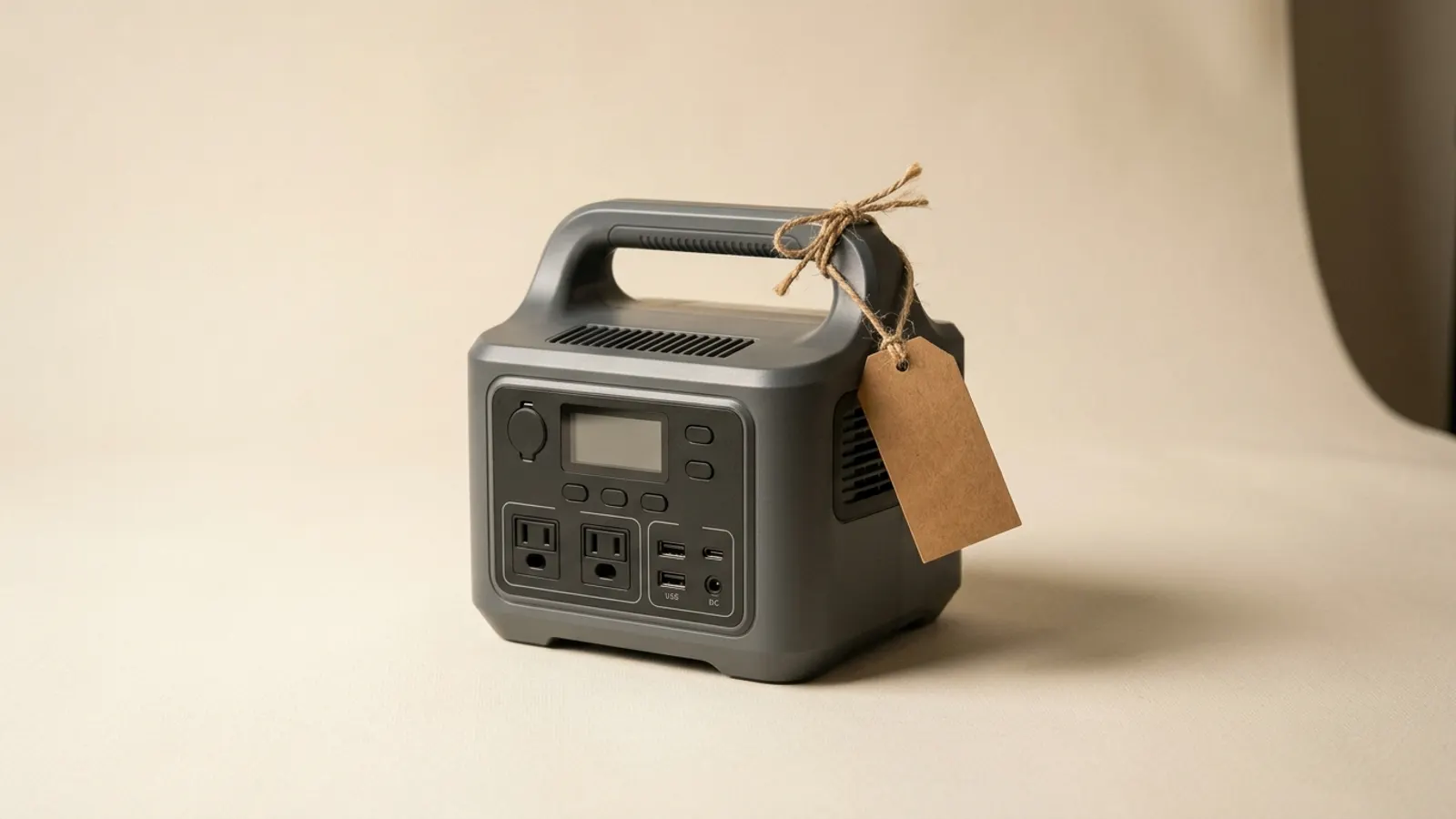
If you live in a flat, choose a power station: a petrol generator has to run outdoors, away from doors and windows, and most flats have nowhere like that. With a garden, a generator becomes possible and makes sense for long cuts, but it is louder and its electricity costs about three to six times more per kWh than mains power stored in a battery.
Carbon monoxide decides the flat question
What the official advice says
The NHS says carbon monoxide has no colour and no smell, so you cannot tell it is there, and it lists portable generators among the causes. HSENI, the health and safety body for Northern Ireland, gives clear rules for generators:
- do not use one indoors or in partly enclosed spaces, including homes, garages and crawl spaces;
- do not run it near open doors and windows;
- fans will not stop carbon monoxide building up in the home;
- fit battery-powered carbon monoxide alarms inside.
What that means in practice
A flat with a small balcony fails those rules, because the balcony sits right against doors and windows. A shared hallway or bin store is a partly enclosed space. So in a flat, the generator question ends here.
In a house with a garden, you can place the generator outdoors, well away from the house and from your neighbours’ windows. It still needs refuelling outside, and petrol stored at home is a fire risk, so check your lease or tenancy rules too.
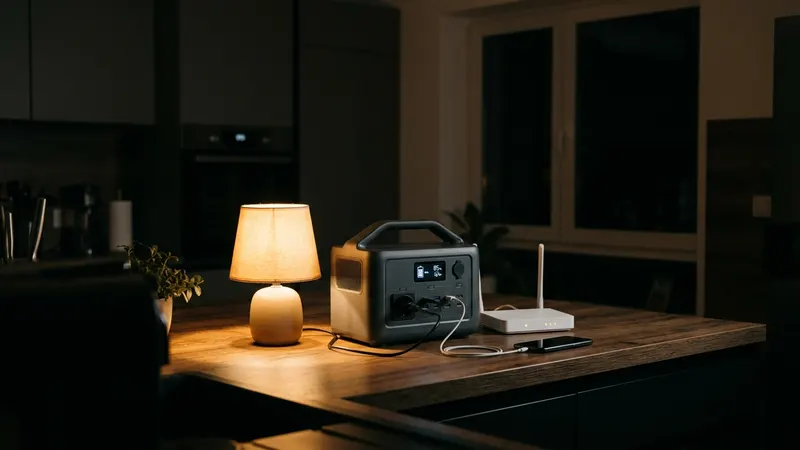
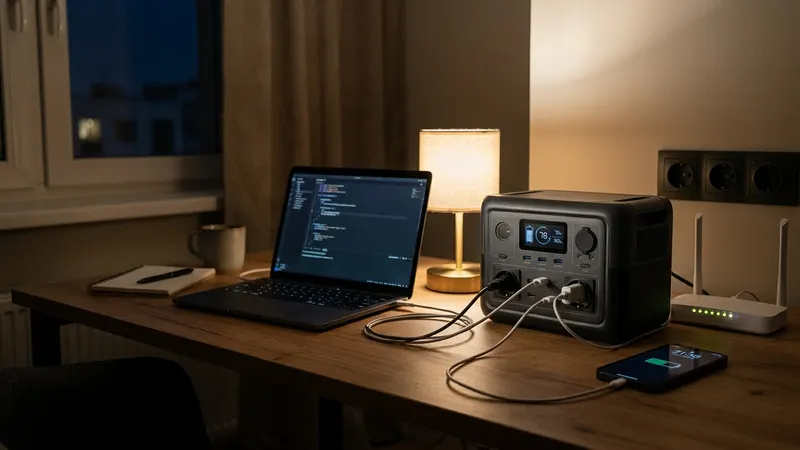
A power station burns nothing. It is a large battery with UK sockets, so you can use it in the kitchen or bedroom.
Noise
Honda announces 71 dB(A) at the operator’s position for its EU22i, a small “suitcase” inverter generator sold as quiet. In a quiet street at night, the neighbours are likely to hear it.
A power station has no engine. The only sound is a cooling fan, which may run while charging or with a heavy load. In a terrace or block of flats, that difference matters as much as the money.
Cost per Wh: petrol against the mains
The generator
We use the Honda EU22i, because Honda UK publishes its tank size and run times. The brand announces 1,800 W rated output, a 3.6 litre tank, and 3.2 hours at rated load or 8.1 hours at a quarter load. Petrol was 172.78p a litre in the government’s weekly figures for the week of 2 November 2026.
One tank costs 3.6 × £1.7278 ≈ £6.22.
| Generator load | Energy from one tank | Cost per kWh | Cost per Wh |
|---|---|---|---|
| Full load: 1,800 W × 3.2 h | 5.76 kWh | £6.22 ÷ 5.76 ≈ £1.08 | ≈ 0.11p |
| Quarter load: 450 W × 8.1 h | 3.65 kWh | £6.22 ÷ 3.65 ≈ £1.71 | ≈ 0.17p |
In a power cut you usually run small loads, like a fridge and a router. Then the generator runs well below a quarter load, and Honda gives no figure for that. Expect each kWh to cost more, not less.
The power station
Ofgem’s price cap sets an average electricity unit rate of 26.32p per kWh for Direct Debit customers from 1 October to 31 December 2026. We count 85% of the battery as usable, so each usable kWh costs about 26.32 ÷ 0.85 ≈ 31p, a little more once charging losses are added.
Refilling an Anker SOLIX C1000 (1,056 Wh, as announced by the brand) from empty therefore costs roughly 1.056 × 26.32p ≈ 28p, plus losses.
The catch is that you need the mains to refill it. In a long cut, the station only gets more energy from a solar panel, a car socket, or the grid coming back.
The bigger cost is the machine
For a few power cuts a year, fuel and electricity are pocket money. The price of the machine itself is what you really pay. A fair comparison divides that price by how much energy you will actually use over the years.
How long each one keeps your essentials going
Take a fridge (45 W on average) and a router (10 W). On a power station, our rule is hours = Wh × 0.85 ÷ (device watts + 10 W), where the 10 W is what the station uses with its sockets on.
| Machine | Calculation | Fridge + router (55 W) |
|---|---|---|
| Anker SOLIX C1000 (1,056 Wh) | 1,056 × 0.85 ÷ 65 | ≈ 14 h |
| EcoFlow DELTA 3 Plus (1,024 Wh) | 1,024 × 0.85 ÷ 65 | ≈ 13 h |
| Honda EU22i, one tank | Honda figure at a quarter load | at least 8.1 h |
At a load this small the generator is likely to run longer than its quarter-load figure, and you can refill the tank. So for a cut lasting several days, a generator in a garden keeps going where a battery stops. For a cut of a few hours, the station is enough and needs no fuel run.
See the detail per device on our fridge runtime page for the Anker SOLIX C1000, or compare it with the EcoFlow DELTA 3 Plus.
Which one fits your home
Choose a power station if…
- you live in a flat, or your only outdoor space touches doors and windows;
- your cuts are usually a few hours, and you want lights, the router, phones and maybe the fridge;
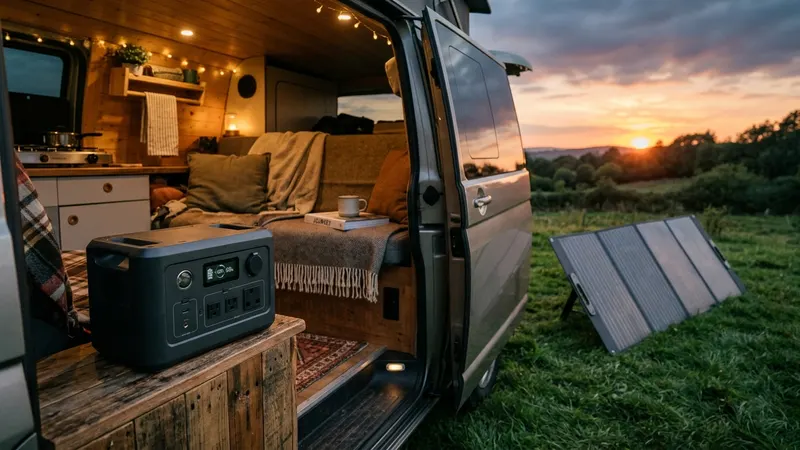
- you want something you can also take camping.
Consider a generator if…
- you have a garden with a spot well away from all windows and doors;
- you face cuts lasting days, in a rural area for example;
- you accept the noise, the fuel storage and the carbon monoxide rules.
Never connect either one to the house wiring or a wall socket. Plug devices straight into the machine, and leave any fixed connection to a qualified electrician. Our emergency kit page lists the rest of what to keep ready.
In short
- A petrol generator must run outdoors, away from doors and windows, so it does not suit a flat.
- At 172.78p a litre, a small inverter generator makes power at about £1.08 to £1.71 per kWh; the mains refill a station for about 31p per usable kWh.
- A power station is silent apart from a fan, and safe to use indoors.
- For long cuts with a garden, a generator lasts longer; for short cuts or a flat, choose a station.
Sources
- NHS: carbon monoxide poisoning
- HSENI: safety tips when using a portable generator
- GOV.UK: weekly road fuel prices (CSV, week of 2 November 2026)
- Ofgem: energy price cap unit rates, 1 October to 31 December 2026
- Honda UK: EU22i generator leaflet (tank, run time, output)
- Honda UK store: EU22i specifications (noise)
Questions
Can I run a generator on my balcony?
Official UK guidance from HSENI says not to run a generator in enclosed or partly enclosed spaces, or near open doors and windows. A balcony is usually right next to both, so treat it as unsafe.
Can I use a power station indoors?
Yes. A power station has no engine and burns nothing, so it gives off no fumes. Keep it on a hard, dry surface with its vents clear, as the manual says.
Which is cheaper per kWh, a generator or a power station?
On fuel alone, the station is cheaper: about 31p per usable kWh from the mains against £1.08 to £1.71 for petrol in our example. The purchase price of either machine is a much bigger cost than the energy for occasional use.
Do I need a carbon monoxide alarm if I use a generator in the garden?
HSENI advises battery-powered carbon monoxide alarms inside the home whenever a generator is used. The NHS also recommends alarms in rooms with fuel-burning appliances.
Stations in this article
- 1056 Wh · 1800 W Anker SOLIX C1000 Every device with the Anker SOLIX C10001,056 Wh Check price
- 1024 Wh · 1800 W EcoFlow DELTA 3 Plus Every device with the EcoFlow DELTA 3 Plus1,024 Wh Check price
How much battery do you need?
Tick your devices and how long you need to last. The calculator gives you the answer in 30 seconds.
Open the calculator