Key takeaways
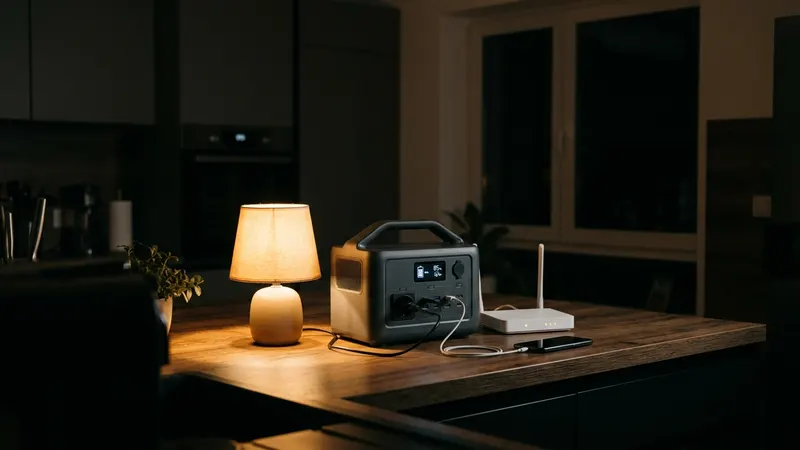
- A station of about 1,000 Wh keeps a router, phones, lights and a fan going for a day or more after a storm.
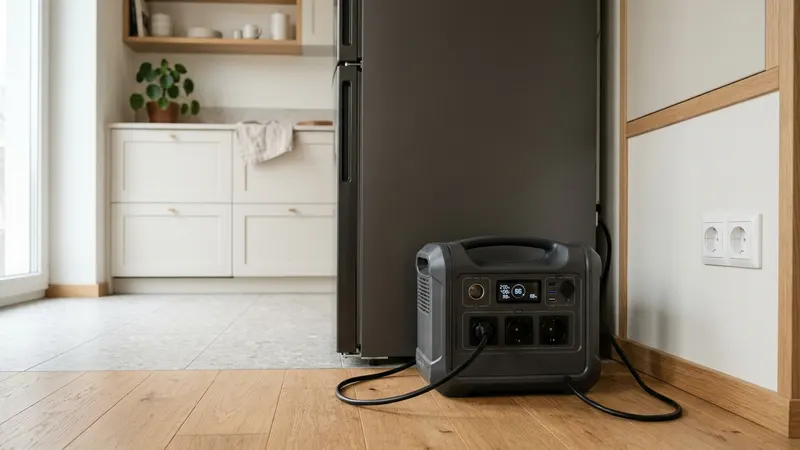
- A fridge running nonstop uses most of a 1,000 Wh station in about 16 hours, so run it in blocks and keep the door shut.
- Central air, an electric range and a water heater are far beyond what a portable station can supply.
- A station makes no exhaust, so it can sit indoors, unlike a gas generator, which must stay outside and at least 20 feet from the house.
In this article
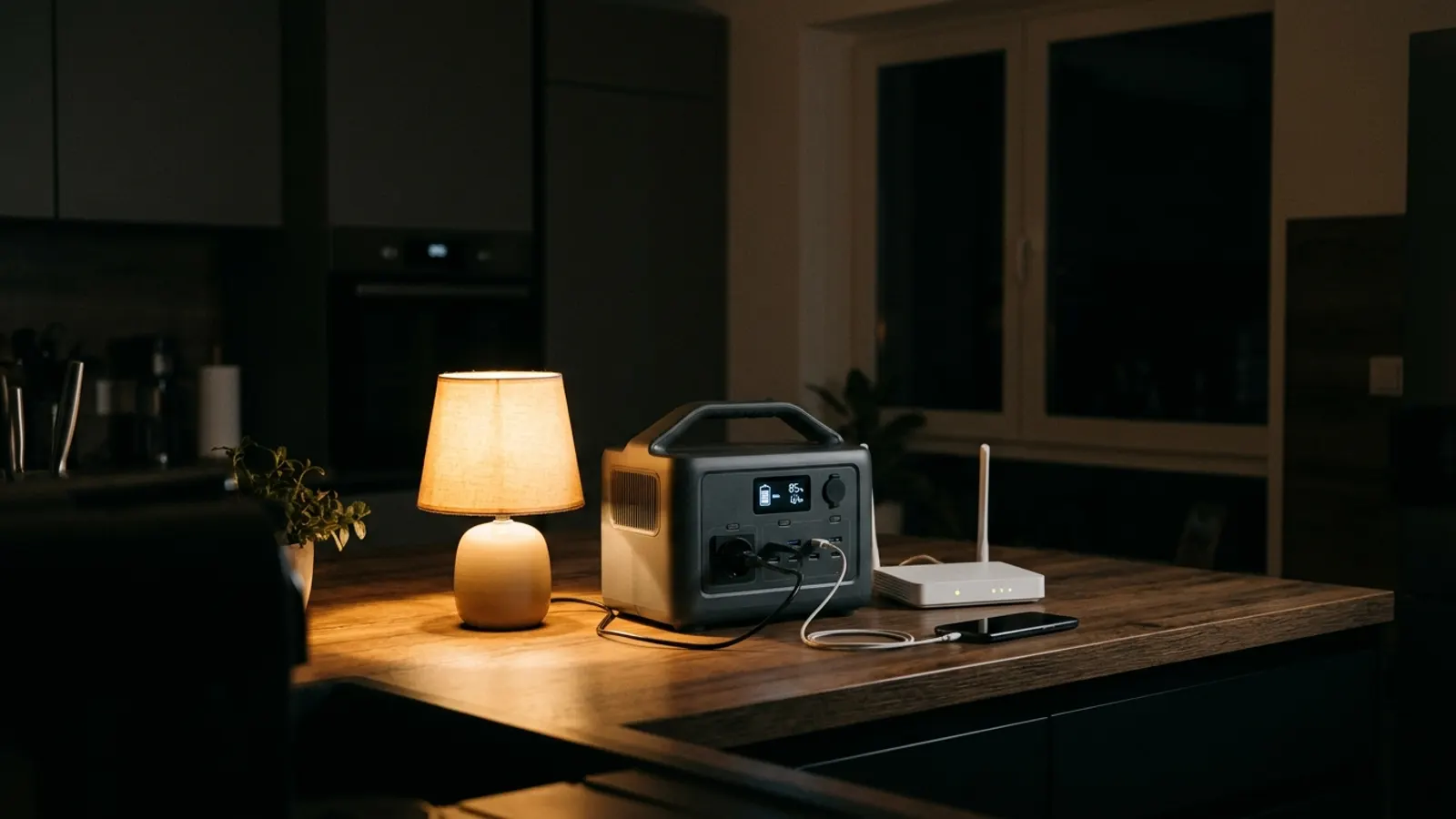
A portable power station will not run your whole house after a hurricane, but it can keep the small things that matter running: internet, phones, lights, a fan, a CPAP and, for part of the day, the fridge. A station of about 1,000 Wh covers the basics for a day or more. A 2,000 Wh station gives you room to add the fridge.
When you need a plan
The Atlantic hurricane season runs from June 1 to November 30, and the National Hurricane Center puts its peak around September 10. Outages after a strong storm can last days, so the plan is not “run everything” but “run the right things for as long as possible.”
A power station is a big battery in a box with regular outlets, USB ports and often a 12 V car-style socket. It makes no exhaust, so it can stay inside the house. That matters during a storm, when you cannot step outside to tend a generator.
What it can run, device by device
On this site we use one formula for every runtime:
hours = battery Wh × 0.85 ÷ (device watts + 10 W)
The 0.85 covers the energy lost when the battery makes household current. The extra 10 W is what the station itself uses while its outlets are on. Device watts are our site averages, so check the label on your own.
Here is what the Jackery Explorer 1000 v2 (1,070 Wh, announced by the brand) runs on its own outlets. Its usable energy is 1,070 × 0.85 ≈ 910 Wh.
| Device | Average watts | Math | Runtime |
|---|---|---|---|
| Internet router | 10 W | 910 ÷ (10 + 10) | ≈ 45 h |
| CPAP, no heated humidifier | 12 W | 910 ÷ (12 + 10) | ≈ 41 h, about 5 nights of 8 h |
| Fan | 40 W | 910 ÷ (40 + 10) | ≈ 18 h |
| Refrigerator | 45 W | 910 ÷ (45 + 10) | ≈ 16.5 h |
| Fridge and router together | 55 W | 910 ÷ (55 + 10) | ≈ 14 h |
A fridge also needs a short burst of about 700 W when its motor starts. The Jackery (1,500 W, 3,000 W peak), the Anker SOLIX C1000 (1,800 W, 2,400 W peak) and the FOSSiBOT F2400 (2,400 W) all announce more than that.
For phones, we count about 15 Wh per full charge. That gives 910 ÷ 15 ≈ 60 charges from the same station.
You can try your own list in the runtime calculator, or open the page for a fridge on the Jackery Explorer 1000 v2.
A day of storm power
A full day adds up fast. Our basic day is a router for 24 hours, two LED lamps for 6 hours, a phone for 3 hours, and the station’s own 10 W for 24 hours. That is 240 + 96 + 30 + 240 = 606 Wh. Add a fridge at 45 W for 24 hours (1,080 Wh) and you reach 1,686 Wh a day.
| Station (capacity announced by the brand) | Usable Wh | Basic day, 606 Wh | Basic day + fridge, 1,686 Wh |
|---|---|---|---|
| Jackery Explorer 1000 v2 (1,070 Wh) | ≈ 910 | ≈ 1.5 days | ≈ 13 h |
| Anker SOLIX C1000 (1,056 Wh) | ≈ 898 | ≈ 1.5 days | ≈ 13 h |
| FOSSiBOT F2400 (2,048 Wh) | ≈ 1,741 | ≈ 2.9 days | ≈ 1 day |
The math: usable Wh ÷ Wh per day. For the Anker, 898 ÷ 606 ≈ 1.5 days.
Make the fridge last longer
Ready.gov says a closed fridge keeps food cold for about four hours, and a full freezer holds its temperature for about 48 hours. The CDC gives the same four hours for the fridge. You do not need to power the fridge every minute.
A simple routine works better:
- Run the fridge a few hours, then unplug it for a few hours. Keep the door shut in between.
- Freeze bottles of water before the storm. They help the fridge stay cold during the off hours.
- Plan meals so you open the fridge once, not ten times.
This is the same idea as the 72-hour plan on our emergency kit page: decide what runs, and when, before the lights go out.
What a portable station cannot do
Some loads are simply too big. Central air conditioning is wired into the house, and a station is never connected to house wiring. An electric range, an oven, a clothes dryer and an electric water heater are also out of reach.
Short, heavy jobs are possible but expensive in battery. A microwave at 1,200 W for 10 minutes uses 1,200 × 10 ÷ 60 = 200 Wh. That is about a fifth of a 1,000 Wh station for one warm meal.
Never connect a station to a wall outlet or to your home’s electrical panel. If you want backup power wired into the house, that is a job for a licensed electrician.
Recharging after the storm
Once the storm passes, a solar panel can refill the station a little each day. PVGIS, a European Commission solar tool, gives about 3.75 kWh per day for each 1,000 W of flat panels in September in New Orleans. That is an average that includes cloudy days.
On paper, a 200 W panel would then make about 0.2 × 3.75 = 0.75 kWh a day. Real output is lower than the panel’s watts suggest: shade, dirt, heat and panel angle all cut into it. After a storm, the sky is often gray for days.
If you also own a gas generator, keep it outdoors. Ready.gov says generators belong at least 20 feet from windows, doors and attached garages. Our comparison of stations lists solar input for each model.
In short
- A 1,000 Wh station runs a router, phones, lights and a fan for a day or more.
- A fridge alone empties it in about 16 hours, so run it in blocks with the door shut.
- A 2,000 Wh station can carry a basic day plus the fridge for about one day.
- Central air, ranges and water heaters are out of reach, and a station is never wired into the house.
Sources
Questions
Can a portable power station run my refrigerator during a hurricane outage?
Yes, for a while. With our average of 45 W for a fridge, a 1,070 Wh station keeps it running about 16 hours. Running it a few hours at a time and keeping the door closed stretches that.
Can a power station run central air conditioning?
No. Central air is wired into the house and needs far more power than these stations deliver. A small fan is the realistic way to stay cool on battery power.
How long does food stay safe if the fridge has no power?
Ready.gov says a closed fridge keeps food cold for about four hours and a full freezer holds its temperature for about 48 hours.
When should I charge the station before a storm?
Charge it to full as soon as a storm is in the forecast, and top it up again the day before. Stations slowly lose charge in storage, so check it at the start of the season too.
Stations in this article
- 1070 Wh · 1500 W Jackery Explorer 1000 v2 Every device with the Jackery Explorer 1000 v21,070 Wh Check price
- 1056 Wh · 1800 W Anker SOLIX C1000 Every device with the Anker SOLIX C10001,056 Wh Check price
- 2048 Wh · 2400 W FOSSiBOT F2400 Every device with the FOSSiBOT F24002,048 Wh Check price
How much battery do you need?
Tick your devices and how long you need to last. The calculator gives you the answer in 30 seconds.
Open the calculator